
Web platform
I built the Laravel Hub, React client, visual editors, apps, toolkits, Knowledge Base, authentication, billing, and community features.
Founder and sole developer
I have spent more than 20 years building software. My work has covered games, web and mobile apps, VR, machine learning, defense simulation, and the systems that hold all of those things together.
Over the last twelve months I built every surface of FlowDot myself. During the same period I led junior engineers and helped deliver a Phase II SBIR defense training project that landed successfully.
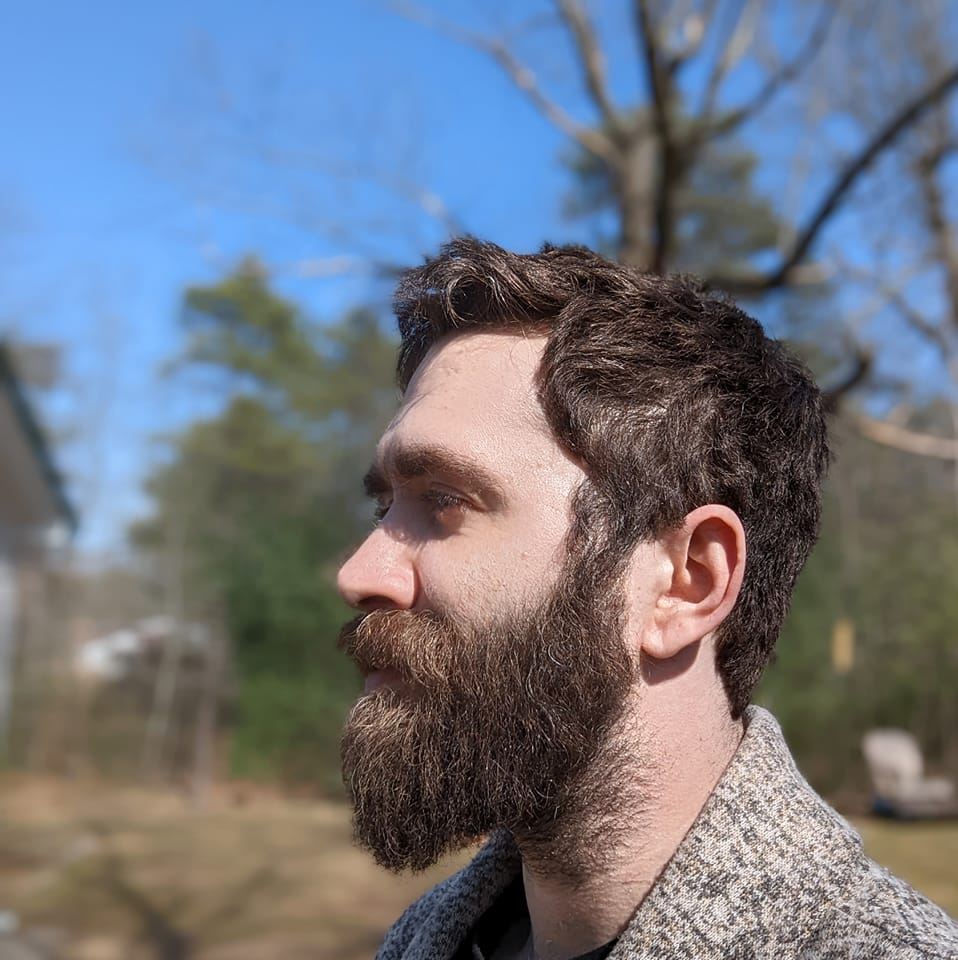
About me
I have never been interested in staying inside one small part of a system. If a problem crosses from a web application into a game client or from a cloud service into a piece of hardware, I follow it across that boundary. I want to understand the whole problem before I decide what the solution should look like.
I think empathy is a practical engineering skill. When something does not make sense, I try to understand what the person or system was trying to do and what constraints it was working under. That habit has helped me work through old software, unfamiliar systems, and products where the real problem was not sitting in the first place anyone thought to look.
Before FlowDot I built and operated the Super Contraption game series, which reached more than three million players. I also built mobile apps, government software, VR systems, and a machine learning gesture detector that recognized more than 50 gestures. At Obsidian Solutions Group I worked across the VERTEX defense training system while leading a three-person development team.
I am most useful when the problem is difficult, crosses several systems, and still has to ship.
The last twelve months
This is a working platform, not a product mockup. I built the public site, the applications people use, the local runtimes, and the server systems behind them.
I built the Laravel Hub, React client, visual editors, apps, toolkits, Knowledge Base, authentication, billing, and community features.
I built recipes, workflows, agent conversations, goals, loops, model routing, streaming, and human approval gates.
I built the local agent, its file and code tools, persistent conversations, recurring work, and state shared across surfaces.
I built the Electron desktop app, mobile app, live voice agents, local MCP hosting, and cross-device session control.
FlowDot can be used from other MCP clients. The desktop app can also run third-party MCP servers and give their tools to a FlowDot agent.
I built the permission system, signed audit trail, real-time run visibility, panic stop, and local model routes.
AI is the product
FlowDot needs AI to do its job. Agents use models to reason, work with tools, run recipes, search a knowledge base, remember context, and hold voice conversations. Those are not optional extras. They are central parts of the product.
FlowDot is not tied to one model company. When models get better, every FlowDot surface can use those improvements. The rest of the platform keeps the tools, permissions, run history, and user context in place when a model changes.
Work before FlowDot
Some of my work has been for millions of game players. Some of it has run inside AWS GovCloud for military training. In both cases the software had to work for the people using it.
VERTEX | Defense training
I led junior engineers and worked across the VERTEX military firefighter training system. The Phase II SBIR project landed successfully.
InventaPlay | Independent games
I built the Super Contraption games as an independent developer. That included the games, servers, art, animation, and the systems used to share player creations.
Work history
I released a physics sandbox with a Rails backend and a system for sharing player creations. The series later reached more than three million players.
I built and operated games, VR projects, backend services, 3D assets, animation, and machine learning systems.
I built iOS and Android products, led the VMBA apps, rebuilt PATH Companion with HealthKit, worked on older web systems, and mentored engineers.
I worked across Unity, multiplayer networking, Laravel, GovCloud, IoT, and military simulation standards while leading three developers.
I built the web platform, CLI, desktop app, mobile app, voice system, MCP tools, local daemon, and the server systems behind them.
I formed the company in New York and continue to build the platform from Peru, New York.
The part that is hard to copy
I am not claiming that FlowDot owns a secret model. The hard part is making agents useful across local and cloud software while keeping their work visible and under the user's control.
In the layer around the model. Permission gates before every consequential action, a signed audit trail behind it, state shared across every surface, and an isolation model where one account's data cannot be reached from another and my own properties cannot reach each other without an explicit grant. That is slow and difficult to build, and it does not get easier when models get better.
FlowDot gets better with them. A better model can be used by the agent, recipes, workflows, voice system, and every other surface without rebuilding the platform around a new vendor.
A job started on one surface can be seen and controlled from another.
Workflows, recipes, tools, apps, MCP, the Knowledge Base, memories, goals, and loops share the same platform.
Permissions, signed audit records, run history, remote approvals, and the panic stop are built into the system.
Users decide which models handle simple, capable, and complex work. They can change that mapping later.
I built the layers together, so changes in one part account for the rest of the platform.
The product is working today. You can read about the platform and inspect the public parts of it directly.